Showing posts with label Charles "Chuck" Hirshberg. Show all posts

Friday, May 23, 2008

I'VE CHANGED MY CHEST BY A PIGEON: A Weakly Blow Linguistic Adventure


A few years back, a magazine editor - let's call her "Mrs. Rhubarb" - offered me three-thousand American dollars to write a one-thousand-word article on a fella whom I'll call "Dr. Hofbrau." Perhaps I should have been grateful, or at least flattered; instead, I felt a mixture of surprise and suspicion.

First of all, the magazine, which I'll call Mump's, was one that I would not have opened with rubber gloves, even if there'd been a fifty-dollar bill hidden somewhere inside of it. And second, I knew that I could not possibly have been Mrs. Rhubarb's first choice to write the story - or any story, for that matter - so there was probably something wrong with it.

What was wrong with it, she explained, was that Dr. Hofbrau's work was "kinda arcane."

That got my attention, for I've got a gluttonous appetite for arcanity, especially when it has the potential to generate $3.oo-per-word, plus expenses. What, I wondered, was Dr. Hofbrau's arcane pastime? Hypnotizing mollusks? Collecting suet? Varnishing his nipples?

No, no, no, replied Mrs. Rhubarb. Nothing as arcane as that! And then she proceeded to explain Dr. Hofbrau's work as best she could, which wasn't very well, because she obviously didn't understand it. But I listened gamely and, in a few minutes, figured out that Dr. Hofbrau's oddball obsession was something I like to call . . . science.

Now, I have an appetite for science, too, so I was inclined to say 'yes.' But then Mrs. Rhubarb felt obliged to mention one more detail. It seemed that Dr. Hofbrau lived in a place called "Germany" and, like far too many inconsiderate people over there, refused to speak English.

"Well, Mrs. Rhubarb," I replied, "I don't speak German. So, you see, I'll not be able to report the story unless Mump's is willing to pay for a translator."

And that is when Mrs. Rhubarb came-up with with a cost-saving idea. Before I tell you what it was, I should first mention that Mrs. Rhubarb was herself a cost-saving idea, typical of the dying magazine industry. She worked cheap, as well she might, having once admitted to a friend of mine that she had never reported a story in her life. Here, then, was her suggestion:

Perhaps I could report the story entirely by email, using an online translation program to render my questions into German, and Dr. Hofbrau's answers into English.

I was tempted to give it a try, just to see what would happen. Instead, I said "no" in a manner that ended my relationship with Mrs. Rhubarb, and Mump's, hopefully forever. And then I forgot all about this silly little occurrence until . . .

.. . a couple of weeks ago, when I happened to hear the magnificent love song Paloma Querida crooned by the magnificent Tex-Mex virtuoso, Freddy Fender. (Freddy is, alas, no longer with us, but here's a charming old cinematic version by Pedro Infante, with dancing horses;
Placido Domingo sings it pretty well, too.) Enchanted, I decided to learn the song myself, so I Googled the lyrics and tried out the elegant Spanish on my thick, English-only tongue. My enchantment grew. What did the words mean? To find out, I excitedly fed them into an online translator, with these results, guaranteed genuine:

I have found in a black path
as a pilgrim with out faith nor runbo
My luck changed by that pleasure
and since then I feel querete
with all the forces that give me the soul
Paloma loved since I've changed my chest by a pigeon


I cannot comment on the accuracy of this translation. I can only say that it interfered with my enjoyment of a beautiful song, so I strongly hoped it was inaccurate.

In order to reassure myself on this score, I devised a disingenuous way of testing online translators in general. I would feed the lyrics of THE STAR SPANGLED BANNER into the
Babelfish online translator, rendering them into five foreign languages; then, I would make Babelfish render them back into English. If these re-translations were close to the original, I would have to face facts: I should have taken that assignment from Mump's. But if the results were a trifle halting or garbled, as I suspected they might be, I could rest assured that Paloma Querida had lyrics worthy of its delicious melody and achingly romantic vibe.

I present the results below - guaranteed genuine - without comment or gloating.

DUTCH: THE ASTRE SPANGLED GOLF

Oh, say can you see
door it early of the paddle
what this way proud
we at twilight's the last gleaming slightly greeted?
Whose broad lines and clear astre
through the dangerous fight,
Calamity doctor flowed the matrix
O'er we this way gallantly have paid attention?

English, booms the matrix
in air rode brilliance of the rocket bursts,
gave proof by the night
which our flag was houten there the pen.

Do do oh, do say do the astre spangled golf
O'er die of bravely of banner
but nevertheless the country of free English the house?

ITALIAN: OUR SMALL FLAG WAS STILL HERE

Oh, as an example can you see
from the light in advance payment of the dawn

that what we have hailed therefore
fierce to last shining of the penumbra?
Of who immense bands and luminous stars
with the fight perilous,
O'er the ramparts that we have watched
therefore gallantly was effluendo?

And the red light vivida of the rocket,
the bombs that burst in air,
was given the test with the night
that our small flag was still here.

Or, as an example ago
that flag star-star spangled however
O' wave er the center and earth free of the good ones?


[Note: In order to be "fair," I have included the Spanish translation, which proved by far the most faithful of the five.]

SPANISH: THE PUMPS THAT EXPLODED IN AIR

Oh, opinion can you see
by the early light of the dawn
what we hailed so proud
in flashing last of the twilight?
Of whom ample rays and shining stars
by the dangerous fight.
O'er the embankments that we watched
so galantemente flowed?

And the red fulgor of the rocket,
the pumps that exploded in air,
gave the test of the night
that our flag was still there.

The Oh, opinion does that flag star-star-spangled wave
O'er the Earth of the free one yet
and the home of the brave one.


I have omitted the German and French results, as they were similar to one or more of the above. But the German translation included a remarkable twist that deserves recognition, if not applause:

O'er the RAM parts, which we watched out . . .

I have only one regret about my experiment: It has compromised my patriotism, if I ever had any, for I must admit that I prefer every one of these translated translations to Francis Scott Key's original English. I beg my patriotic readers not be offended, as I can assure them that, whatever my feelings about America in general, I would never, ever do anything to disgrace its flag.

I leave that to others.


- cc -

Wednesday, May 21, 2008

THE GARDEN OF GOTHAM


One day in 1989, when I was a restless boy journalist in Washington, DC, I opened a book by H. L. Mencken and read the following dispatch from across time and space:

New York has the best of everything, including the best of the worst.

In those days, I lived according to a simple precept: You might as well believe everything you read, because if you don’t, it might turn out to be true, and then where would you be? And so, to make a long story blessedly short, I dove into the cauldron of experience that is New York City, with all the enthusiasm of a dog leaping into a vat of Alpo.

And there I wallowed, tail a-waggin’, for some fifteen years before I finally began to grow nauseated from it. You can only devour New York for so long before it turns around and starts devouring you. Have you ever stopped to imagine what it would feel like to be devoured by a vat of Alpo? Have you?


I escaped to Boston about two years ago, but the vicissitudes of fortune (and misfortune) have frequently driven me back to Manhattan for days or even weeks at a time. And I've never left it without wondering: How in hell could I have been happy in such a place for fifteen minutes, let alone fifteen years?

None of New York’s attractions seemed remotely worth its stress, filth, expense and stench of Alpo - until a few weeks ago, when a close friend, whom I’ll call ‘Wasp’, invited me down for a weekend of horticulture.


You will not need to be reminded that horticulture isn't a typical New York activity. But Wasp is not a typical wasp. To be sure, she lives in a typical one-bedroom apartment on the 20th floor of a typical New York building. But in spring and summer, two unique elements combine to make Wasp's apartment an enchanted place: Wasp herself; and a very long (though not very wide) terrace, suitable for container gardening.


It has always seemed to me that flowers don't bloom on Wasp's terrace, but, rather, rise up out of the earth when she summons them. And now that I've stood nigh and seen the process - nay, now that I've lent a humble hand in it - I realize that I have been spectacularly wrong, as usual. I will not attempt to describe the two-day tsunami of labor and artistry that took-place up there; but I will say that it reminded me of one reason why I once loved living in New York. It's a place where beauty of all sorts sits cheek-by-jowl with every manner of outrage and horror. And I think that is the most realistic context in which to behold both beauty and horror. But not everyone has the courage and stamina for it.


Wasp has got it, in spades. Twenty floors above an avenue choking with carbon monoxide and vile New York expletives, it pleases her to create a beautiful muthafuckin' flower garden, so each year she creates it. This garden would be glorious anywhere; but its concrete-and-steel setting produces a miraculous atmosphere that no country gardener, however gifted, could achieve.


In the Sunday twilight, after two days of horticulture, I flopped down on one of Wasp's comfy deck chairs. My clothes reeked of ParaLite and fertilizer; my fingernails were clotted with potting soil; and my baseball cap was glued to my scalp with sweat. I regarded Wasp, fussing over her morning glories; I regarded the moon, taking its place over the shoulder of a coal-black skyscraper; I regarded my senses and realized that they had not been so aroused, in so many different ways, in quite some time. And I heard myself say:


"Wasp! This is how I want to live!"


I meant it, too.


The next day, I went back to Boston with all sorts of astounding revelations Jiffy-Popping around in my head. And in my heart - and in my camera - I carried home a bouquet.


-cc-
Photographs by Charles "Chuck" Hirshberg, esq. All rights protected by a shadowy agency of the Bush administraion.

Sunday, April 27, 2008

THE BLOW IS BACK


'Tis springtime, and my fancy has turned to mush.

I don't mean actual mush, like oatmeal or baby food. I mean sentimental mush.

Yesterday, as I was pointing my camera at a spring bloom, a bee floated gently down upon the petals and as I watched him trot gaily towards the ovule . . .


. . . I heard a loud, unexpected snap!


'Twas the sound of my mind, snapping out of a three-month torper. And I bethunk myself of whole cauldrons of mushy stuff, including:


It is worthwhile to fall in love, even though the crush of heartbreak is a natural (maybe even probable) outcome of loving. And it is worthwhile to live, because life is a lot like love in this mushy respect. More often than not, life runs afoul of Death, and Death enjoys smashing-up hearts almost as much as He enjoys taking lives. Still, I am grateful for my life. I am grateful that I have a heart that's worth breaking.

So you see, now that springtime has set me a-gushing with mush, the mush, in turn, has reinvigorated my urge to blog.


It seems that I enjoy smearing my mush all over the Internet, just as, once upon a time, I enjoyed smearing oatmeal and baby food through my hair.


It seems that Hirsh Horn's Weakly Blow is like a fragrant, colorful spring bloom, only brown, and not at all fragrant.


And it seems that you, my loyal, befuddled readers, are a lot like the neighborhood bees who cluster 'round my head nearly every spring morning, trying to decide whether I deserve to be pollinated or stung.

Thanks for clustering. It's been a long time.


-cc-


The Weakly Blow will recommence gusting on-or-about May 20. Seriously, thanks to those who wrote asking for more. To use a typically sly Weakly Blow metaphor, you've blown new life into this blog.


Photograph by Charles 'Chuck' Hirshberg. All rights reserved - and brought to you by HAZMAToasties, the only breakfast-flavored cereal that gives you nine essential industrial effluents.

Thursday, December 13, 2007

MY KINDA TOWN: A WEAKLY BLOW MIDWESTERN MISADVENTURE


Destination . . .

. . . CHICAGO!


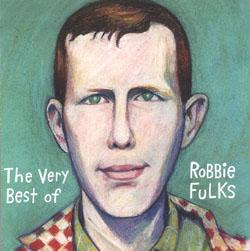
A few months ago, I received an email from one Robbie Fulks, esq, a talented singer, songwriter and guitarist whom I have long admired.

From time to time, Robbie invites various musicians to the Old Town School of Folk Music in Chicago where he puts on concerts that he later broadcasts on his XM Radio* show, "Robbie's Secret Country." His email informed me that on December 9, he intended to devote one of these concerts to the music of The Carter Family, a subject upon which I am an expert, or at least a blowhard. Would I be willing to come to Chicago to be interviewed on stage? If so, he was prepared to pay me the astounding sum of $300; and if I would condescend to appear at a second concert on the same day, the gratuity would be correspondingly doubled.

Now, talking is one of my favorite diversions and rarely do I receive this sort of encouragement, so I said 'yes' without hesitation. On December 8, I jetted to the
City of the Big Shoulders, landing at O'Hare Airport at precisely noon. Despite the cash windfall Robbie was about to lavish upon me, I was in an economical mood and made one of the greatest errors of my error-filled life: I decided to take public transportation from the airport to my hotel.

Nearly a week has passed and I am still recuperating from this ordeal, but the healing process has been hastened considerably by an exchange of emails with Alison Perona, Inspector General of the Chicago Transit Authority, which I reproduce below in its genuine entirety:

Dear Inspector General:

How are you? I am fine. I live in Boston and recently visited Chicago for the first time in many years. I decided to try your service from the airport and it was, I think, an unnecessarily distressing experience, which I know you did not intend and would not wish to see repeated.


Here is what happened: After retrieving my suitcase from baggage claim, I followed the signs to the subway and stepped up to a pass-dispensing machine to purchase a pass. I had five twenty-dollar-bills and $1.75 in change. As you probably know, the subway costs $2, so I put one of the twenties in the machine and asked it for a $2 ticket. However, the machine did not give me a ticket. It simply looked back at me as though I was stupid and reminded me that I had just given it $20, which I already knew. Fortunately, a nice man came up behind me and said: "That thing don't give change." Not being from Chicago, I reached for my wallet and pulled out a credit card, only to hear the same nice man (and he was a nice man, as you shall soon see) say: "It don't take credit cards neither." Looking about me, I saw a gaggle of out-of-towners like myself, staggering around like zombies, holding out large bills and begging Chicagoans for change. Fortunately for me, the nice man was nice enough to give me a quarter.

So here's my first question: Is it really true that your subway machines don't give change or take credit cards? Because I have lived in Boston, New York and Washington, three cities that, in many ways, have nothing on you, I'm sure, but all of which allow commuters to both use their credit cards and receive change for large bills.

Now, here's another pickle I'd like you to think about: The train ride from the airport to my hotel in Rogers Park took an excruciating two-hours-and-twenty-minutes (this is not a typo.) I spent most of the trip recalling cliches about slowness - "slow as molasses in January," "I'm coming, and so is Christmas," etc - and there were several annoying incidents along the way that dragged out the journey even further.

For instance, just three stops into the trip, we were all hustled out of the train and loaded onto a tightly-packed slow-moving shuttle bus where I was forced to listen to a very nasty man fulminate against illegal immigrants. He said that unless Mexico stopped "sending us" illegal immigrants, we should invade it and remove its leaders. Evidently, he believes this strategy is working so well in Iraq that we should try it out on other countries that threaten our security by being poor. Please find this man and waterboard him.

Anyhoo, eventually the bus rolled up to the next stop and unloaded us and we waited another ten minutes for another train that moved along at an average speed of, I'd say, 6-1/2 miles-per-hour. That train, however, was like the Georgia Mail compared to the train I transferred to, I believe on the cheerlessly-named "Brown Line." What was truly impressive was that this Brown Line train achieved extraordinary depths of slowness while skipping as many stops as it stopped at, much to the fury of my fellow passengers, most of whom were Chicagoans and probably deserve better.

So here is my second question: Is there some way that you could let me know when these various annoyances are corrected, so that I can return to Chicago under more pleasant circumstances?

Many thanks for your kind attention to these questions. I am sure you will appreciate that they are offered in a spirit of friendly encouragement.

Very truly yours, etc.


I am delighted to report that, in less than 24 hours, I received the following reply:

Dear Mr. Hirshberg,

On behalf of the CTA, I apologize for the inconveniences you experienced on your trip to Chicago.

The CTA is currently engaging in massive reconstruction and improvement projects, most notably on the Blue and Brown Lines. If you check the CTA's website http://www.transitchicago.com/, you can follow the progress of these projects.

I have forwarded your e-mail to the relevant departments so that all of the issues presented can be reviewed.

N.B. The President's authorization to use "extreme tactics" on enemies of the United States does not permit the CTA to waterboard obnoxious customers, no matter how annoying they are.

Alison Perona
Inspector General


Needless to say, I was more than satisfied with every aspect of this reply - except one, which I called to Ms. Perona's attention in a subsequent email, to wit:

Dear Inspector General:

I could scarcely have hoped for a more prompt, professional and gratifying response to my email of 12/13. However, I do wish to call your attention to one unfortunate bobble on your part. You wrote: "The President's authorization to use 'extreme tactics' on enemies of the United States does not permit the CTA to waterboard obnoxious customers." I am sure that is true, for the time being. But please note that the President's policy authorizes ENHANCED tactics of interrogation, not EXTREME ones. Waterboarding is an enhancement, not an extremity.

Nonetheless, your email has greatly enhanced my impression of Chicago in general, and the CTA in particular.

Gratefully yours, etc.

It only remains for me to recount to you, the interested reader, the remaining highlights of my visit to Chicago. On Sunday morning, I dressed in conservative blue, found the Old Town School of Folk Music and asked to be taken to Mr. Robbie Fulks, which was accordingly done. Robbie was leading a small ensemble in a song called "I've Got a Home in that Rock" and enjoying himself hugely; but the moment he turned his head in my direction, his enjoyment evaporated. It was obvious that he did not recognize me and would have been happy to continue not recognizing me for the rest of his life.

This was understandable and, indeed, typical. My appearance is such that it produces unsettling sensations in strangers, especially women. Indeed, it happens so frequently that I rarely become rattled in these situations. I was quite sympathetic to Robbie, as my face-and-figure pose particular problems to a professional entertainer who has committed himself to appearing with me on the stage. On the other hand, I had exchanged enough emails with Robbie to optimistically consider him my friend. But on another hand, I realized that I had only actually met him once, at my ex-brother-in-law's wedding seven-or-eight years ago.

"'It's me," I explained, extending my hand aggressively, "Charles 'Chuck' Hirshberg."

Had I announced myself as his blind date, Robbie Fulks could not have been more disappointed. He stared at the neck of his guitar in an agony of embarrassment as he shook my hand.

"It's been a long time," I pointed out, helpfully.

"Ya," he mumbled, "since our, um, . . . wedding."

I tried changing the subject. "Am I dressed okay?" I asked.

He looked at my clothes and snorted: "You're over-thinkin' this."

For the next few hours, Robbie energetically avoided me until it was time to invite me onstage for the interview, which went rather well, I thought. Robbie is unnecessarily tall and I am imprudently short and the audience seemed to enjoy the Mutt-and-Jeff aspect of our conversation. So at the end of the second show, when Robbie invited me on stage to sing a verse of "Worried Man Blues," I thought he had begun to accept me. I had a slight cold and sang my verse in a gruff, down-home growl that the audience applauded with great sympathy. A few days later, I wrote Robbie, asking for a recording of my performance. He replied thus:

"The channel on the mike you sang through was not turned on. You can hear your vocal a little bit as bleed through the other mikes. But mostly, you can hear me laughing sinisterly, like Eddie Murphy, through a mike that is on."

Ah, well. At least that explains the audience's enthusiastic applause: They couldn't hear me.

----------
*XM is a satellite radio service that works like this: First, you purchase a special XM radio receiver for about $600; then you pay a fee of approximately $600 a month, which may seem like a lot, but you get to listen to your choice of 46,000 channels, each of them broadcast by satellite to ensure perfect stereophonic clarity. A rival service, Sirius Radio, charges twice as much and offers only 23,000 channels, but one of them features Howard Stern. Decisions, decisions . . .
-cc-